Pappy AI Bartender
AI bartender for Scrappy's Bitters. Designed it in 2024. Funding got tabled. Building it myself in 2026.
A $22 bottle gathering dust on a friend’s shelf
Scrappy’s COO wanted home buyers using their hand-crafted bitters past the one recipe they came in for.
Watching people use other recipe apps told a different story.
Interviews wanted nine features. Watching people swipe through food apps said three.
Designed it in 2024. Building it now myself.
The 2024 design and GPT prototype got tabled when funding fell through. Two years later I have the build chops to ship it.
Pappy is live now, including a 4-mode Scan tool
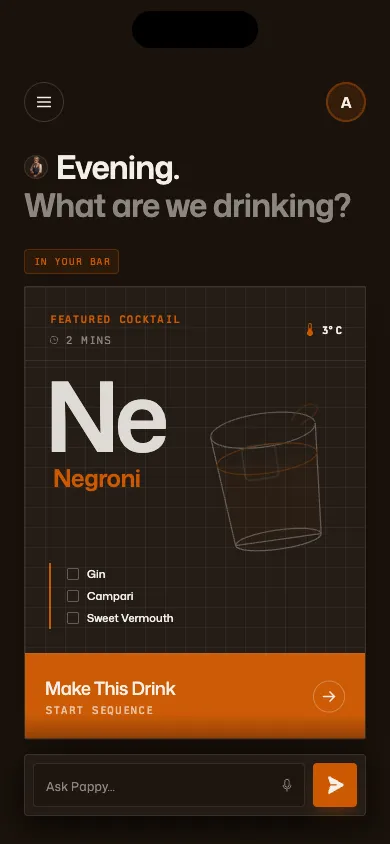
Home, Bar, Chat, Recipe, Discover, Scan, Profile. Scan reads bottles, menus, and food, and adds to your bar.
During the pandemic, my wife and I were making batch cocktails in mason jars and dropping them off on friends' porches. A friend who's COO at Scrappy's Bitters hooked me up with their full lineup and started sharing recipes he was riffing on. People started asking for shopping lists, what bitters did what, what five ingredients they should buy. I was answering all of that by hand. My wife and I made a little recipe booklet together, kinda for fun.
The booklet
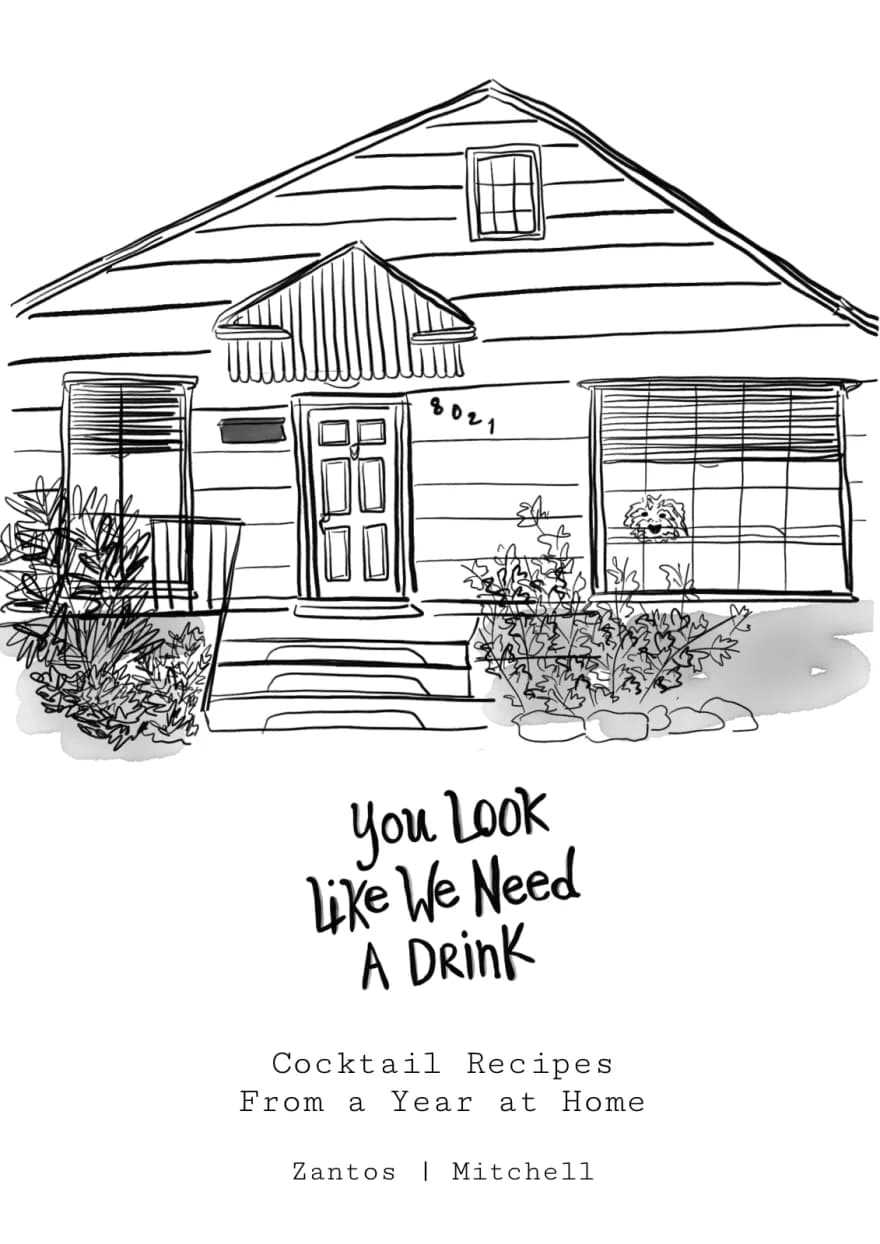
You Look Like We Need a Drink
Fifteen pages of cocktails from a year stuck at home. My recipes, my wife's drawings. That's our porch on the cover.
In 2024 that same friend looped me back in with a bigger ask. Scrappy's $22 hand-crafted bitters had strong credibility with pro bartenders but kept stalling at home. Buyers grabbed one bottle, used it for one recipe, then left it on a shelf. He wanted those bottles picked up again. The job: figure out whether an AI bartender could scale what I'd been doing for friends, only for everyone.
The 2024 design
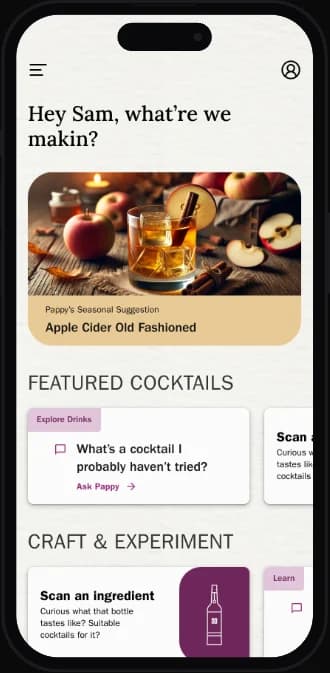
Pappy as a designed object before any code shipped.
Cream and parchment palette, featured cocktail card, prompt-led discovery.
Nine features became three after I watched people use food apps that already existed.
The first round of interviews painted a clear product. People wanted a superapp. Recipe management, inventory tracking, a community feed, notes on every bottle they owned. Nine primary features tested well one after another.
Then I sat with a few of them and walked them through food and recipe apps that already existed. No prototypes, no Pappy yet. I wanted to watch what people did with feature-rich food software when you put it in their hands. They missed features they'd told me they cared about. They tapped past onboarding screens like the ones I was about to design more of. They got tired. So I cut six features. The MVP became three: a home screen with prompts, a chat with Pappy, and a clean recipe viewer.
Before the cut
The first version walked users through seven onboarding screens.
Built to that depth because interviews said people wanted it. Watching people use other apps said otherwise.
The 9-to-3 cut
Nine tested features became three focused screens.
Testing showed confidence came from bartender guidance, not feature breadth.
The build estimate came back around $30K. Scrappy's was packing up to relocate headquarters around the same time. The project didn't get past prototyping. I had Figma files and a custom-GPT version of Pappy that worked well enough to demo, but no path to a shipped product. It sat.
I picked it back up in 2026. Seven screens are live now.
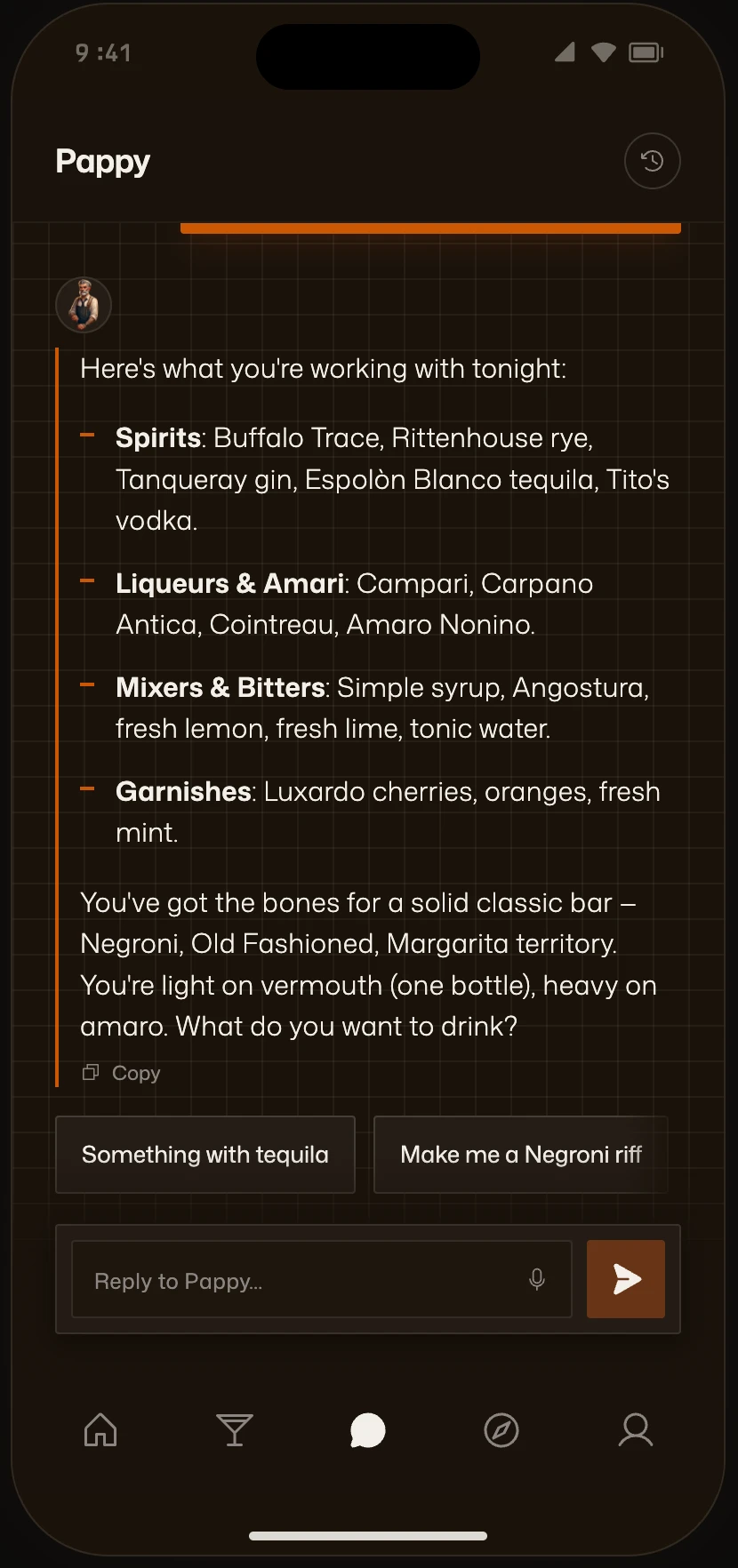
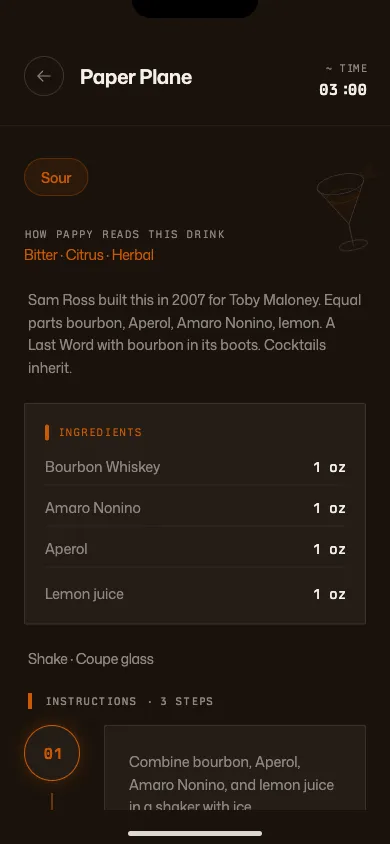
Two years later I have the build chops to do it myself. Pappy lives at pappy-demo.vercel.app. Seven main surfaces plus an onboarding flow, all solo, built with Claude Code and Next.js. Home, My Bar, Chat, Recipe, Discover, Scan, Profile. Chat is still the spine of the product. The rest feed it.
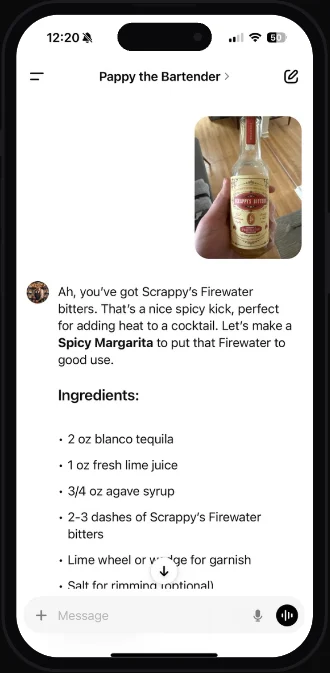
Scan is the surface that wouldn't have been in the 2024 design. Point it at a bottle and Pappy reads the label. Snap a menu and get recommendations. Show it the food you're cooking and get a pairing. Tap a bottle to add it to your bar. One camera, four jobs.
The 2024 testing held up the direction. Confidence in cocktail experimentation went from 3.5 to 4.3 out of 7. SUS scores jumped from 73 to 83. People found new uses for ingredients they already owned. That was my favorite part then. It's still the point now.
Chat is the spine
The conversation stayed the center of the product.
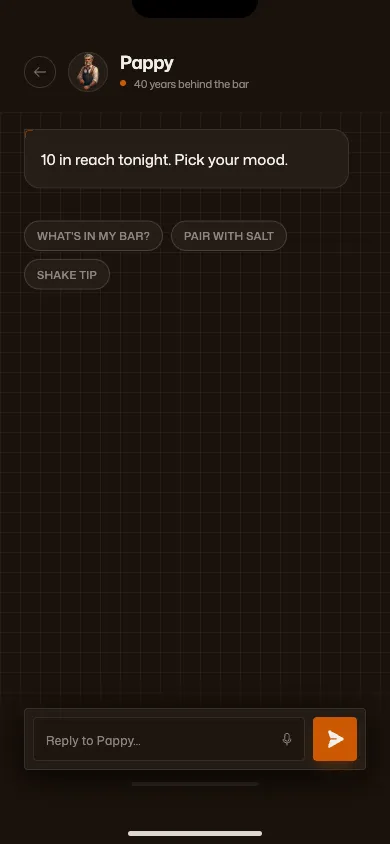
The 2024 prototype was a custom GPT. I built it in mid-2024 because that was the most agentic tool that existed at the time. Custom agents, MCP, the whole vocabulary for what's now a category. None of that was here yet. The Pappy character lived inside a chat window I'd set up with a system prompt and a temperament. I demoed it to the COO like that.
Whatever instinct made me reach for that tool in 2024 is the same one I'm building with in 2026. It got better at its job. So did I.