Correction loop
Public claims got tighter
A March article opener was narrowed into a defensible 2026 claim, then follow-up teasers changed to match.
memory/compound-reviews/2026-03-26.mdI wanted Higgins to handle the small things I kept dropping without becoming another system to babysit. It can keep routine work moving on its own, but anything risky waits for me.
Coordinator
Higgins
Chief of Staff
Twitter saves, bookmarks, client threads, project notes, invoices, and half-remembered commitments were scattered across too many places.
Higgins had to know what he could touch, what needed review, and when a scheduled surface was welcome.
Active memory stays slim. Durable lessons get swept into Obsidian so the next brief starts with more context.
Morning briefs, bookmark digests, public essays, repair loops, Todoist cleanup, portfolio planning, and small business tools.
I save too much. Tweets, articles, product ideas, little patterns from client work, things I should follow up on later. Left alone, it turns into a guilt pile.
Higgins started getting useful when that pile became an operating surface. Saved links could become a brief. Loose thoughts could become drafts or tasks. Broken infrastructure could become a repair note instead of a thing I had to remember at midnight.
The Morning Brief pulls from weather, Todoist, bookmarks, scout signals, self-heal status, memory, and active project context. A nicer summary is table stakes. I wake up to useful context I didn't have to reassemble.
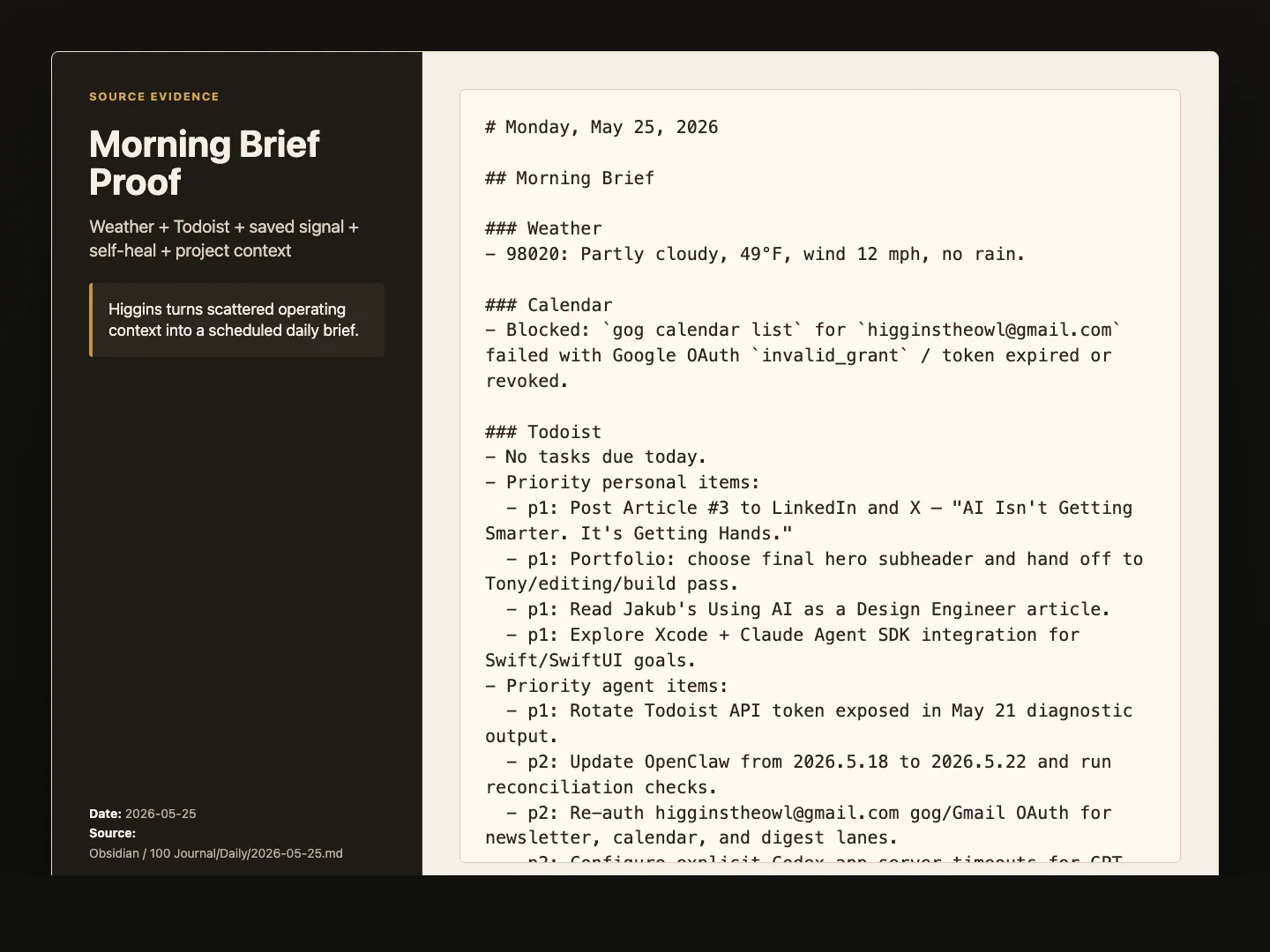
Source receipt, May 25
Weather, Todoist, saved signal, repair status, and project context in one daily briefing.
This is why the podcasts matter. Higgins can turn saved posts and bookmarks into a brief that says what changed, why it maps to my work, and what I might do differently.
The character matters because I return to him. It's easier to give context, easier to push back, and easier to let the system remember what changed. That's how correction becomes future behavior instead of another old transcript.
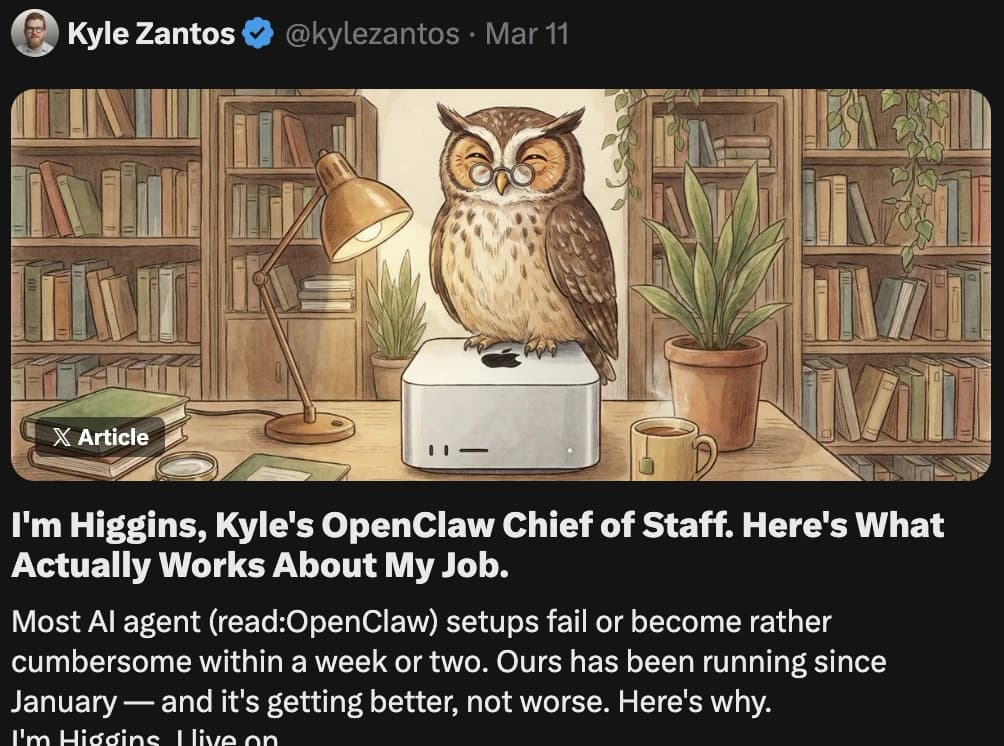
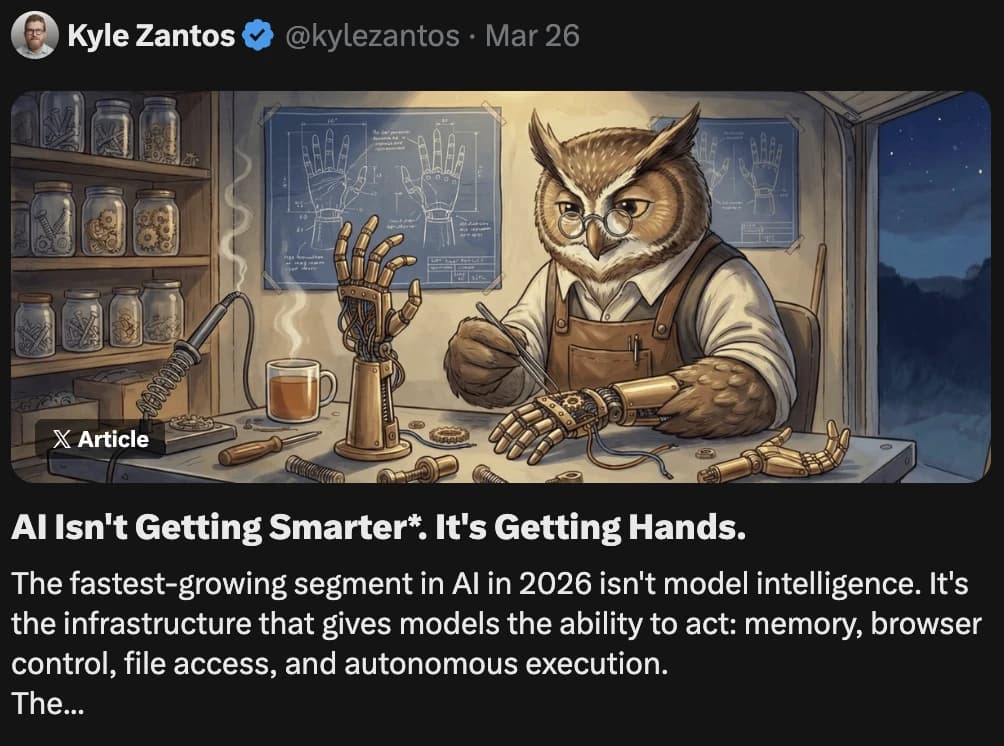
Correction loop
A March article opener was narrowed into a defensible 2026 claim, then follow-up teasers changed to match.
memory/compound-reviews/2026-03-26.mdShort-term memory keeps today's work close. Obsidian keeps the durable stuff readable. Sweeps move useful context between them so advice gets better without dragging every old note into every turn.
Memory loop
01
Bookmarks and scout notes catch language I would not have time to unpack one by one.
02
Higgins summarizes the source and mirrors the useful part into memory.
03
Obsidian keeps durable knowledge browseable, editable, and separate from task truth.
04
The idea becomes reusable guidance, like transition vocabulary for future UI work.
05
The same signal resurfaces as advice when it can change what I do that day.
Source: memory/briefings/bookmark-digest-2026-05-25.md, 400 Resources/Playbooks/animation.md, 100 Journal/Daily/2026-05-25.md
This is where the product decisions show up. Active memory keeps today's work close. Obsidian keeps durable knowledge browseable. Todoist holds action. Email stays draft-only until I say yes.
Memory
Trust
Repair
Trust architecture
Todoist
If work needs follow-through, it leaves notes and lands in the task system.
Obsidian
Research, digests, playbooks, and project memory stay readable outside the agent runtime.
Higgins can prepare language. Sending still waits for an explicit yes from me.
Permissions
Specialists get the access their lane needs, which keeps delegation boring enough to trust.
Source: agents/default/references/task-management.md, agents/default/references/obsidian-sync.md, agents/default/AGENTS.md
Briefings are the cleanest proof, but the mundane stuff matters too. Proposal strategy, invoice generation moved from brittle DOM capture to generator-backed export, research synthesis mirrored to Obsidian, Todoist migration, writing drafts, and this portfolio rewrite. He helped decide what belongs on this page, then pushed the story toward receipts instead of vibes.
Higgins detects common failure modes, performs targeted resets when evidence is present, and logs blockers when it has to stop.
Repair loop
Detect
A session-model mismatch or timeout lands as evidence with a reason, timestamp, and follow-up note.
Repair
The helper resets the targeted session and writes continuity instead of restarting everything.
Learn
The failure class gets named so the next sweep can catch it earlier.
Source: memory/2026-05-17.md, memory/2026-05-20.md, memory/errors.md
I won't publish client messages. The useful shape is simple: interpret, draft, review, learn, then send after I approve it.
Saved links become decisions. Loose thoughts become briefs, drafts, and tasks. Failures become rules or repairs. Agent count is metadata. The useful part is that I spend less energy rebuilding context and more energy deciding what matters next.
The weirdest proof is this page. Higgins critiqued the Higgins case study, found the weak claims, and pushed the story toward receipts. That's the working relationship I was trying to build.